
CHAGHLA ALDAN TECHNOLOGY
Back to real estate

Hotel and hospitality investments

Find the right hotel, through the right process

Chaghla Aldan matches buyers and sellers of hotels and resorts through a confidential, structured process. We never judge a hotel on price alone: its licences, trading figures, physical condition and earning power are read together.

  • Screening of opportunities that never reach the open market
  • Legal, technical and financial review run as one workstream
  • Hands-on guidance for investors entering Türkiye for the first time
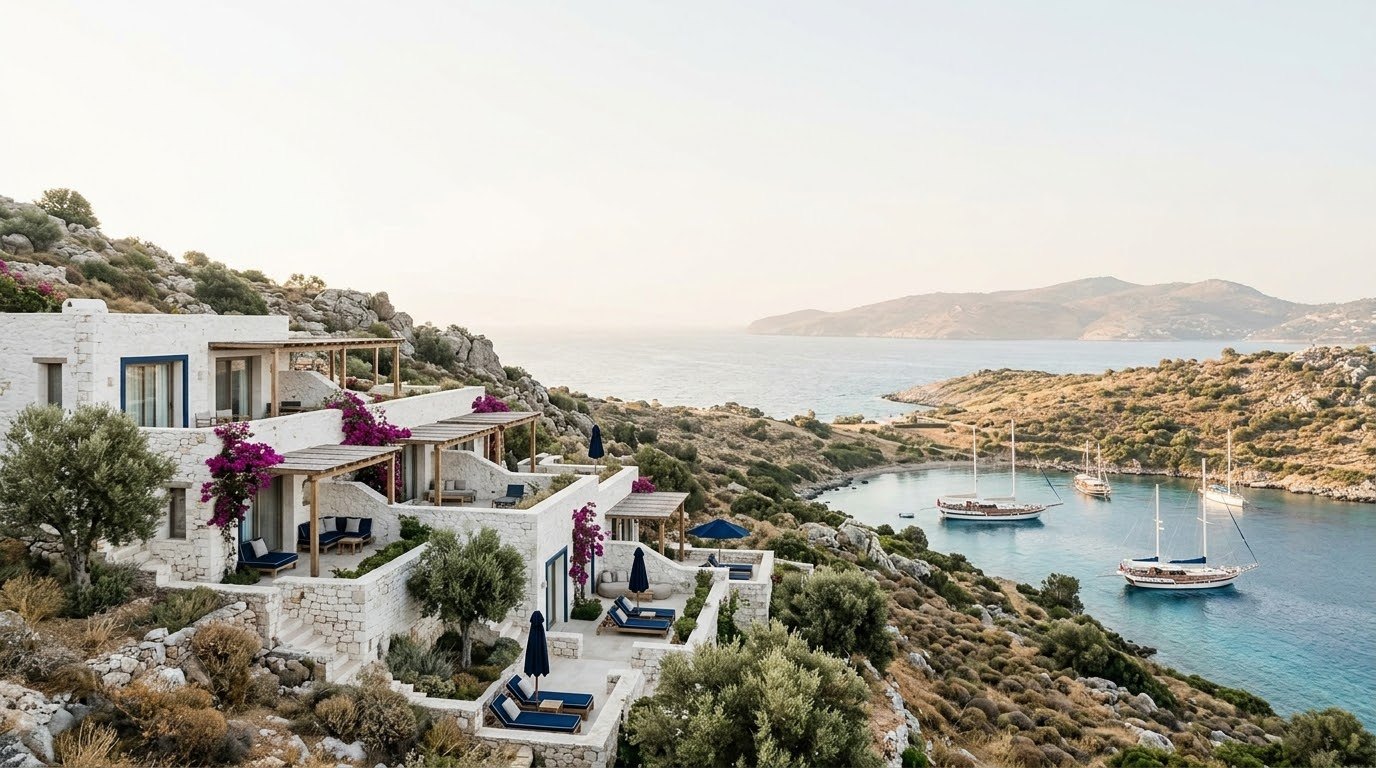
A boutique hotel with stone and white terraces above a quiet Aegean bay

Hotel and hospitality investments

Regional data and opportunities

Operating hotels, repositioning and development opportunities in Antalya, Muğla, Istanbul, İzmir and Cappadocia, with market indicators by region and an investment enquiry.

Market outlook

Demand is strong; what matters is which asset you choose

63.9 million

Visitors to Türkiye in 2025

$65.2 billion

Tourism revenue in 2025, up 6.8% on 2024

10.7 nights

Average length of stay

$100

Average daily spend per visitor

Russia, Germany and the United Kingdom remain the largest source markets, and the 2026 tourism revenue target stands at $68 billion. That keeps appetite for hospitality assets high, but location no longer decides returns on its own. Operating model, licence status, current income and renovation needs carry as much weight as the address.

Source: Ministry of Culture and Tourism, 2025 figures (announced 30 January 2026).

Our services

What we handle in a hotel investment

01

Opportunity sourcing

Listed and off-market hospitality assets are screened against your budget, region, scale and objective, and only those that meet your criteria reach the shortlist.

02

Preliminary assessment

Occupancy, average daily rate, income and cost structure are read together, so the return case is clear before any negotiation starts.

03

Due diligence coordination

Title status, operating licence, zoning and occupancy permit, debts and encumbrances, and technical condition are reviewed by one team of lawyers, accountants and engineers on a single timetable.

04

Operating model advice

Self-operation, a lease, a management contract or a franchise: each option is weighed in numbers against the asset and your own goals.

05

Support for foreign investors

Tax number, power of attorney, valuation report, title transfer and post-closing registrations are managed step by step.

06

Seller side

For hotel owners: preparing the sale, matching with buyers in confidence, and releasing information in a controlled way.

Asset types

The hospitality assets we review

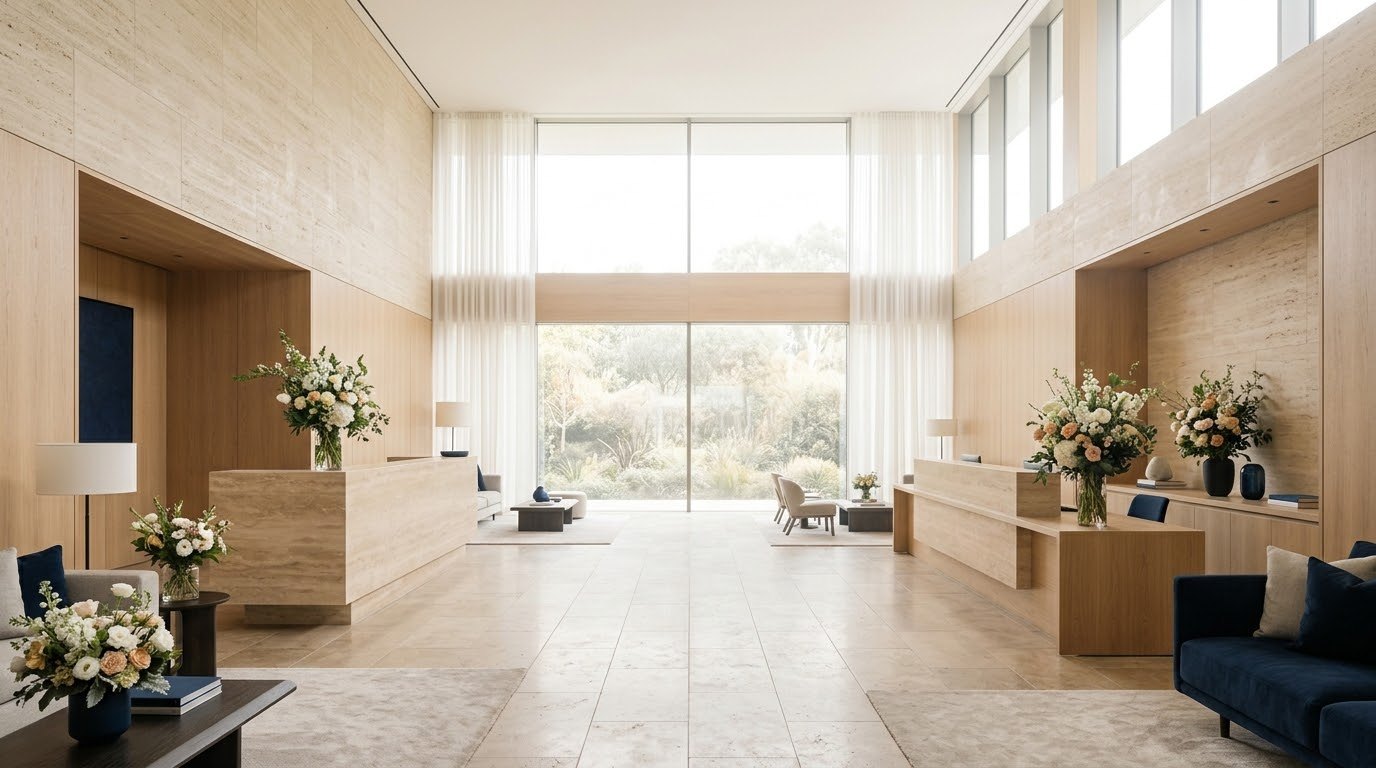
A bright hotel lobby with travertine walls and a reception desk

City hotels

Year-round demand, business travel and cultural tourism make income steadier; occupancy stability and the direction of room rates are what count.

Resort and leisure properties

Income leans on the season, running costs are high and the renovation cycle is short; the investment case rests on how those three balance.

Boutique hotels

Few rooms, a strong location and a clear brand identity; the operator's skill largely determines the return.

Apart and serviced accommodation

A leaner operating structure, where leases and management contracts tend to take centre stage.

Development projects and land

Zoning, permits and the project scenario come first; tourism land has a page of its own.

Land portfolio

Valuation

The numbers that set a hotel's value

A hotel is a trading business, not a flat that is valued on rent. Its price therefore follows the income the operation produces rather than the floor area on the title deed. We read every asset through the measures below.

Occupancy

Room nights sold as a share of room nights available. It can be lifted by cutting price, so it misleads on its own and is always read alongside average daily rate.

Average daily rate (ADR)

Average revenue per room sold. It shows the true picture only once it is broken down by sales channel and board type.

Revenue per available room (RevPAR)

Occupancy multiplied by average daily rate. It folds the two measures into one figure and is the most common yardstick for comparing hotels.

Gross operating profit (GOP)

What remains of departmental revenue after operating costs, before fixed charges. Management fees and rents are usually negotiated on this figure.

Value per key

Price divided by the number of rooms. It gives a quick comparison with similar assets but never justifies a price by itself.

Income-based value

A value drawn from the asset's expected future net operating income, with seasonality, renovation spend and licence risk written openly into the calculation.

The final value is set by the report of an independent, licensed valuer. This section only describes how we read an asset.

Illustrative scenario

How revenue reads in a hypothetical 100-room hotel

Illustrative calculation, not a forecast

The table below is not based on a real hotel or on market data. It is calculated from chosen assumptions to show how occupancy, average daily rate and margin change the result.

CautiousMiddleStrong
Occupancy55%65%75%
Average daily rate (ADR)€80€100€120
RevPAR€44€65€90
Annual rooms revenue€1,606,000€2,372,500€3,285,000
Annual total revenue€2,294,286€3,389,286€4,692,857
Gross operating profit margin (GOP)28%34%40%
Annual gross operating profit€642,400€1,152,357€1,877,143

Assumptions: 100 rooms, open 365 days a year. Rooms revenue is taken as 70% of total revenue; the rest is food and beverage and other income. Amounts are in euros.

The margin rises with occupancy because fixed costs are spread over a larger income. In a real hotel the outcome depends heavily on seasonality, the operating model, management fees, and lease and renovation obligations. This table is not investment advice or a promise of returns.

Operating models

How a hotel is run shapes its return from day one

Self-operation

Ownership and operation sit together, so all of the income and all of the risk belong to the investor.

Best suited to
Investors who know the trade or can build a strong management team.
What to look at
Operating skill feeds straight into returns, and off-season costs stay with the owner.

Lease

The owner lets the property to an operator for a fixed or income-linked rent.

Best suited to
Owners who want steady cash flow without running the hotel.
What to look at
The tenant's financial strength, the term, and who carries the renovation obligation.

Management contract

You remain the owner while a management company runs the hotel for a fee.

Best suited to
Investors who want to keep ownership and benefit from professional management.
What to look at
How the fee is structured, performance thresholds and the terms for leaving the contract.

Franchise

You keep running the hotel yourself, under a brand's name, standards and booking network.

Best suited to
Independent operators who want the pull of a brand.
What to look at
The renovation cost of brand standards, franchise fees and the contract term.

Destinations

Where our work is concentrated

Mediterranean coast

Antalya and its surroundings, and Muğla destinations such as Bodrum, Marmaris and Fethiye; the stretch where resort and boutique assets cluster.

Aegean

The İzmir and Çeşme corridor: coastal hotels and boutique stays set within historic districts.

Istanbul

City hotels. Demand runs all year and competition is fierce, so every asset gets its own close analysis.

Cappadocia and inland regions

Boutique and concept hotels, in areas where experience-led operating models stand out.

Portfolio

Hotels in our portfolio

Active opportunities are shared once a confidentiality agreement is in place

Hotel sales touch the continuity of the business, its staff and its competitive position, so most assets are never publicly listed. Once you share your investment criteria, suitable assets are presented to you alone, after a preliminary assessment and the confidentiality steps.

Share my investment criteria

How we work

Five steps from enquiry to closing

  1. 01

    Brief and investor profile

    Budget, region, scale, operating preference and timing are pinned down.

  2. 02

    Confidentiality agreement

    Mutual confidentiality terms are put in writing before any asset information changes hands.

  3. 03

    Matching and preliminary assessment

    Assets that meet your criteria are shortlisted, and their income structure and return case are reviewed.

  4. 04

    Due diligence

    Legal, technical and financial review is carried out, and the findings are reflected in price and terms.

  5. 05

    Negotiation and closing

    Price, payment plan and transfer terms are agreed, and the transfer of title and operating licence is followed through.

Timing depends on the asset's legal and operational condition, the buyer's status and how ready the other side is.

Investor guide

Nine checks before buying a hotel

01

Title classification

Whether the title is registered as a hotel or commercial property, and whether that matches how the building is actually used.

02

Tourism licences

Whether the tourism operating licence is current, how it transfers and what the new owner must do. For projects under construction, the investment certificate is reviewed separately.

03

Zoning, occupancy permit and structure

Whether an occupancy permit exists, and whether there are unlicensed extensions or illegal floors.

04

Debts and encumbrances

Mortgages, liens, tax and social security debts, checked against land registry and agency records.

05

Financial history

Two to three years of income and expense statements, occupancy by season, average daily rate, payroll and fixed costs.

06

Technical condition and renovation

Plumbing, electrics, roof, insulation and furnishings; the renovation budget is a natural item in price negotiation.

07

Operating model and competition

Competitors in the area and new supply in the pipeline; self-operation, lease, management contract or franchise.

08

Deal structure

In a share deal, past liabilities generally pass to the buyer with the company; in an asset deal, title and licences are transferred separately. Which suits you is worked out for tax and licensing separately.

09

Seasonal cash flow

The working capital needed for the months when income dips and costs carry on is planned apart from the purchase price.

This list is for information only and is not legal or financial advice. Every transaction should be reviewed by a qualified lawyer, accountant and valuer.

Transaction flow for foreign investors

The general flow is set out below. Details are confirmed for each asset against the buyer's status and current regulation, and purchases made with residence or citizenship in mind may carry extra conditions.

  1. 1Agreement on the terms of sale
  2. 2Turkish tax number obtained with a passport
  3. 3Notarised power of attorney if a lawyer will act for you
  4. 4Mandatory valuation report (appraisal)
  5. 5Appointment at the land registry and transfer with a sworn translator
  6. 6Tax registration and operating licence procedures after closing

Frequently asked questions

Why is there no public listing on this page?

In hotel sales the continuity of the business, its staff and its competitive position are sensitive matters, so asset details are shared only after a suitability review and a confidentiality agreement.

Can a foreign investor buy a hotel in Türkiye?

Yes, subject to the conditions set by law. Reciprocity, military restricted zones and area limits are checked separately for each asset and each buyer.

How is a hotel valued?

Usually on an income basis: occupancy, average daily rate and gross operating profit are used to value the asset's expected future net income, with value per key as a secondary cross-check. The final figure is fixed by an independent valuation report.

Is a share deal or an asset deal better?

It bears directly on the tax burden, the transfer of licences and who keeps past liabilities. We work through both structures separately, and the decision is taken together with your lawyer and accountant.

What should I prepare before getting in touch?

An approximate budget range, a target region, the type of hotel you prefer, how you intend to run it and a rough timeline are enough; we settle the rest together.

How soon will I hear back?

Once your enquiry reaches our team, we usually respond within a few business days, after an initial review.

I own a hotel and want to sell. Where do I begin?

Hotel owners have a separate enquiry flow. Sharing your authority to sell and basic details of the asset is enough; the whole process is run in confidence.

Enquiry

Qualified hotel investment enquiry

Share your acquisition criteria. Relevant opportunities are introduced through a secure, selective process after an initial suitability review.

The initial enquiry is for preliminary assessment only. Detailed documents and financial information are requested through secure channels after suitability and authority checks.

Next step

Share your criteria and we will look at suitable assets together

Send your budget, region preference and timing, and our team will contact you after a preliminary assessment.